Case 04 / 04
It looked like a software problem.
- Year
- 2026
- Role
- Summer Associate
- Type
- Consulting, client workshop
- Employees in the client group, two countries
- 500+
通 tōng · Communication
Situation
A European recycling group with more than 500 employees across several countries had a list of complaints about its project management. Deadlines slipped, information arrived late, nobody trusted the status reports.
Every item on the list was phrased as a software problem, because software is the thing you can buy.
Task
Design the client workshop. Before that could happen, somebody had to find out which of the reported problems a tool would actually solve, and which ones would survive any tool.
Approach
- 01
Ran stakeholder interviews before designing anything. CEO and CFO first, then the business functions in Spain and Denmark.
- 02
Asked for the last concrete case rather than for the general problem. A general problem gets a general answer, a last Tuesday gets a fact.
- 03
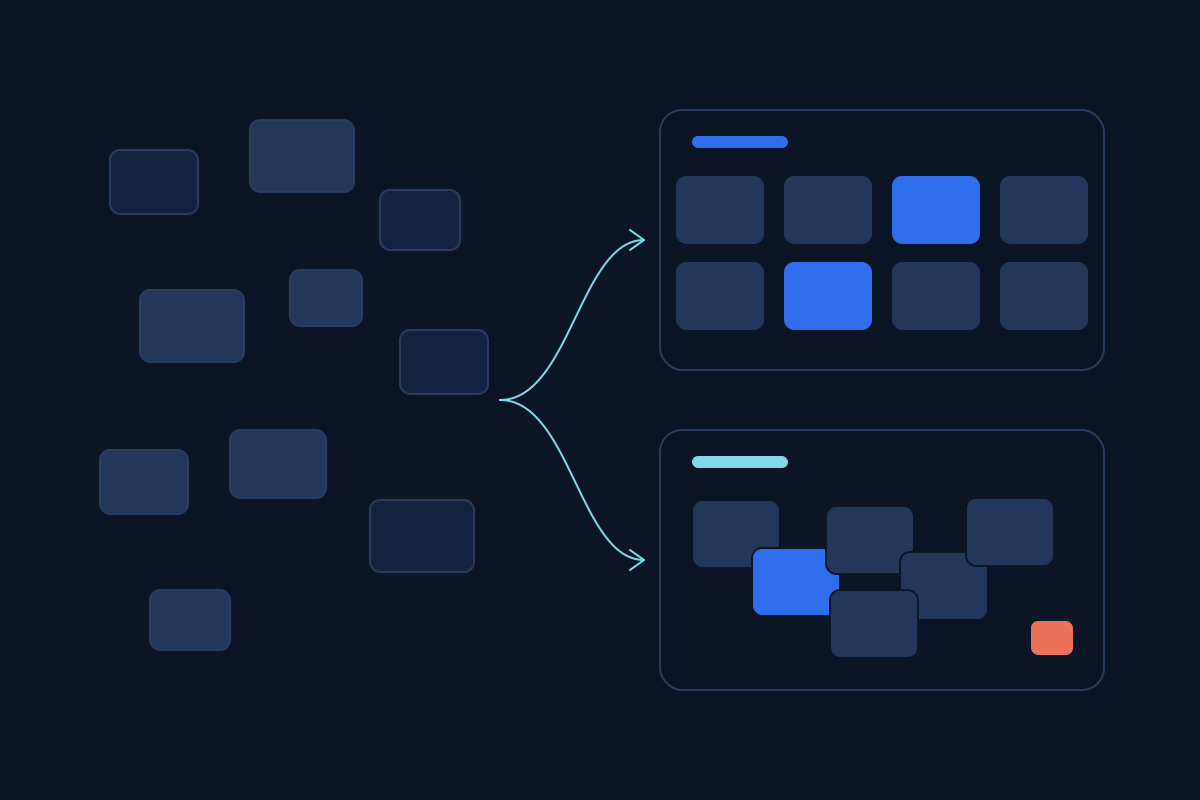
Sorted every reported problem into two piles. Things a tool changes, and things only a decision or a clear responsibility changes.
- 04
Checked the second pile against the first. Several complaints about the software turned out to be complaints about who is allowed to approve what.
- 05
Designed the workshop on both piles, with the organisational half named openly on the agenda instead of hidden inside a tool discussion.
Result
500+
Employees in the client group, two countries
Two lists instead of one. What the software has to solve, and what no software will solve. The workshop in Madrid ran on both.
- 2 listsinstead of one, what the software has to solve and what no software will solve
- 2 roundsof interviews, one had been planned
- ES + DKbusiness functions interviewed in Spain and Denmark, after CEO and CFO
How it was measured
There is no percentage here, and that is the honest version. What can be checked is the agenda. Every item on it points back to a named interview, and the organisational half stands on the agenda in writing, where a client can refuse it before the room fills up.
What I learned
Problems arrive dressed as software problems because that is the form in which they can be bought away. Undressing them takes interviews, not a tool evaluation.
What I got wrong was the schedule. I planned one round of interviews and needed a second, because the conversation with the CFO changed which questions were worth asking the business functions.