Case 04 / 07analytical
Analysis of nine competitors.
- Year
- 2026
- Role
- Associate Intern
- Type
- Market analysis
- Price, features, market communication
- 3 decisions
析 xī · Analysis
Result
3 decisions
Price, features, market communication
Three decisions came out of the analysis: a price adjustment, a reordered roadmap for the features, and a different description of the product in market communication.
- 2criteria, price and feature depth
- 1source and one date on every entry in the matrix
- 3 of 3decisions traceable to a matrix row and its source
How it was measured
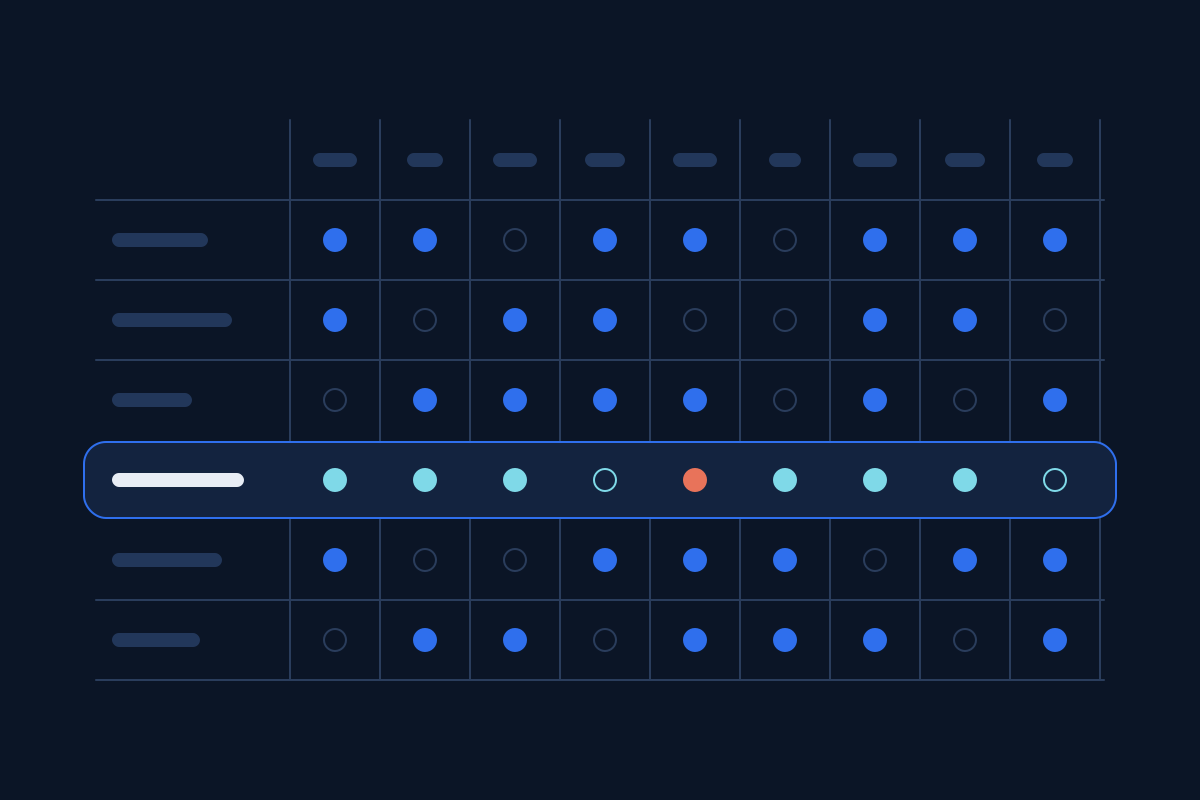
There is no percentage for this. But for each of the three decisions I can show which row of the matrix it comes from and where the figure in that row came from.
What I learned
A large part of the value sat in the empty cells. Where nobody in the market publishes a price, that says something about how they sell.
I nearly filled those cells with careful estimates. The table would have looked complete and been useless, because an estimate and a fact look the same once they sit in the same table.
Situation
The product was priced against a market that everyone knew only by hearsay. The feature comparisons came out of sales calls, which means they came out of whatever the last prospect happened to mention. Nobody could say with confidence where the product sat on price in the German market.
9 competitors in the German market, known by reputation rather than by data
Task
I was asked to put nine competitors in the German market side by side on price and feature depth, in a form that survives a discussion in the management and that somebody else can keep up to date later.
What I did

- 01
I set the frame first, before collecting anything: which nine providers, and by which criterion exactly these and no others. What counted was overlap in the segment and the reachable customer, not company size.
- 02
I collected from primary sources only: public price lists, trial accounts and product documentation. Every entry says where it came from and from when.
- 03
I kept list prices and negotiated prices apart and never averaged them, because a published figure and a figure from a sales conversation are not the same kind of number.
- 04
The feature matrix has a yes-no column and a notes column, so that a yes cannot hide a limitation.
- 05
Where no public data existed, I left the cell empty and presented it empty. Then I turned the matrix into three recommendations.